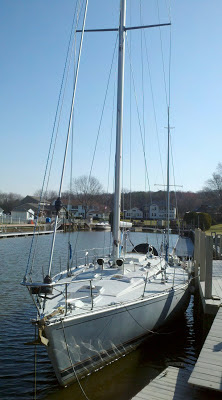
Thursday, March 14, 2019

Thinking about sailing safely

Over the past year or so I've moved most of my blogging efforts over to my S/V Peregrine Charter website and blog. One of the things that I've been looking at lately is how to be a better, safer sailor. This includes preparation of the boat as well as crew skills. One of the resources that I've relied on heavily is the World Sailing Offshore Special Regulations. They provide extensive discussion about how to prepare a boat and crew for anything from coastal races to the most challenging of offshore conditions. Section 6 describes training crew training and there are two items that are considered required at every level as routine training that should be practiced at least annually.

  1. Crew-Overboard Recovery
  2. Abandonment of Vessel
I personally believe that the one other topic that deserves crew practice is fire fighting. Just as with a crew-overboard situation, time is critical. A small fire that might be contained can rapidly develop into a boat consuming inferno that would force the crew to abandon ship.

Boat US published a good article on boat fires a few years ago that included a table of the federally required fire fighting equipment. 


Fire Extinguisher Minimum Carriage Requirements

Vessel LengthNo Fixed SystemWith Approved Fixed System
Source: A Boater's Guide to the Federal Requirements for Recreational Boats, United States Coast Guard
Less than 26 feet1 B-I0
26 Feet to Less Than 40 Feet2 B-I or 1 B-II1-BI
40 Feet or 65 Feet3 BI or 1 B-I and 1-B-II2 B-I or 1 B-II
The Offshore Special Regulations have a slightly higher requirement (2 kg of dry power is a B-II type extinguisher): 

For Category 3 Races (Races across open water, most of which is relatively protected or close to shorelines.)
4.05 Fire Fighting Equipment 
  4.05.1   A fire blanket adjacent to every cooking device with an open flame 
  4.05.2   2 fire extinguishers, each with 2 kg each of dry powder or equivalent, in different parts of the boat  

I personally have opted to go one step further aboard Peregrine (a 45 foot boat) having 2 B-II and one B-1 extinguisher. When looking at the layout I couldn't put an extinguisher close at hand so that I could grab an extinguisher to fight a fire from wherever in the boat I happened to be when the fire was discovered.

To pull all three of the training topics together in a fun way, I've outlined a "Sailing Safety Race" that could be put on by Yacht Clubs or other organizations to promote the improvement of crew skills.

Thursday, August 13, 2015

Hacking Peregine

I haven't been posting as regularly as I'd liked, this is a summary of what went on in the spring and I'll be sending out a summary of the first half of our racing season a little later.

Peregrine spent the month of March on the hard at the Charleston City Boatyard. I did a little work, they did a little work and we launched in time for the CORA Spring Offshore Race, where kicked off the season with an excellent performance. I attribute our finish to a combination of the great work that City Boatyard did on the bottom paint and great crew work with several new people on the boat. The dolphins were out in force and the weather was made to order for us blowing 10-15 with 4 ft seas offshore.

Last fall I had several nervous moments when my 1980's vintage depth sounder started telling me it was 1' deep while we were in a shipping channel. Charleston harbor has more than its fair share of shallow water. While we were out of the water I decided install some new instrumentation, but I'm operating on a budget so I couldn't afford a tear out - upgrade. This post discusses the process of integrating our new Airmax (Garmin) DST 800 sender with the existing instruments.


Here are some pictures of the process of removing the old sender through hull. It was a less painful process than I anticipated and the new unit fit smoothly into place without any drilling or filling. At the yards recommendation the new unit was bedded with 5200. I was pleasantly surprised that the whole thing stayed dry after we launched.

The DST800 I selected was the NMEA 0183 version, I wanted it to be compatible with OpenCPN, which I run on my laptop.

There were two objectives to my project. First, that the sender signals would be available at the navigators desk for the plotter, PC and recording log. Second, that I would have access to the depth and speed information at the helm using the existing displays if possible to reduce costs.

My existing NMEA 0183 setup consists of a Garmin 76 GPS, a VHF radio with AIS and a laptop running OpenCPN. 

The layout for the new system will add the DST800 feeding the PC. The next piece of the puzzle is to expand our display options so we can see the output from the DST800 on deck, etc.

Tuesday, August 26, 2014

The Savannah Cup and why we wear life jackets.

This past weekend we raced from Charleston to Savannah in the Charleston Ocean Racing Savannah Cup. The race was both fun and challenging and we were enjoying some great competition. Over the course of the weekend we experienced a wide variety of conditions ranging from dead calm (we actually drifted around in circles) to 25 knot winds and waves around 5-6 feet as we approached Charleston harbor in the pre-dawn hours. We were a crew of five; two Sea Scouts, one younger co-worker and two of us older guys; all are good to strong swimmers.

My life jacket rules are as follows; when on deck a PFD will be worn AT ALL TIMES when underway. I sometimes relax that rule for adults in the cockpit on calm days in protected waters. PFDs may be taken off when in the cabin. Jacklines are run whenever we go outside the harbor. A tether will be worn while offshore and clipped on at night and in rough conditions. The standard is fairly strictly enforced, to the occasional frustration of some of my teenage crew members.

Several times during the race I commented to the crew on the importance of using a tether when we looked off the stern of the boat into the darkness of the white-caps and six foot seas. With the boat sailing at 8-9 knots someone falling from the boat would be gone in seconds. I also spot checked the crew's tether's to ensure that they were properly connected through both of the harness rings not just one side of the vest.

As we were approaching the dock after nearly forty hours of straight sailing we were looking forward to breakfast once we were tied up. The winds were about 12 knots from the North East, there was an ebb current running about 1.5 knots. We had furled the sails, placed fenders and everyone was in their docking positions.

About 150 feet from the marina entrance one of our crewmen lost consciousness and toppled off of the boat into the water. For a brief moment I couldn't believe what I was seeing,  I saw the crewman fall from the boat and yelled Man Overboard! The crew responded smoothly one watching the man overboard (MOB) while another got the boat hook. At first we tried to instruct the MOB to swim to the nearby dock but quickly realized he was unresponsive. We executed our man-overboard  drill; since we were motoring the approach was much less complicated than if we'd been under sail. Once we re-connected with the MOB a crewman hooked his vest strap with the boat-hook and positioned him at the transom near the ladder for recovery. Two of our crew used his tether and harness to slide him up the sloped transom and into the cockpit. Once aboard we treated our MOB for shock, he was conscious but confused. As we returned to our dock the crewman regained awareness putting a happy ending on the too exciting experience.

What we did right:
  • All crew were wearing their PFDs; his PFD absolutely saved this young sailors life.
  • The built in harness in offshore inflatable PFDs makes a huge difference in when trying to recover a MOB
  • Enough of the crew members had discussed or practiced MOB procedures to efficiently recover the MOB.
What we need to fix:
  • Use two legged tethers so that you can be continuously tethered as you move about the boat.
  • The captain needs to be aware of any relevant medical conditions of his crew. 
  • We need to actually practice MOB recovery more often including during poor conditions.
  • Be more consistent and thorough in the pre-sail briefing of MOB procedures.
What we learned:
  • The first (very brief) thought of most of the crew was disbelief that someone had actually gone overboard.
  • Inflatable PFDs work great if they are well maintained and properly worn (most of the crew commented that they'd always wondered about that).
  • The hardest part of the recovery can be getting the person back on the boat.
  • PFD crotch straps matter; we observed that inflatable PFDs ride up around the persons face if they are unconscious.
  • Good health and swimming ability are no substitute for a PFD.
  • God is good; prayers for a safe event were answered in many ways during the weekend. There were many more ways this could have turned out much worse.

Saturday, August 16, 2014

Summer sailing Charleston and the Leukemia Cup!

We've had incredible sailing weather this July, only one Wednesday night race was cancelled due to lack of wind; and most of the fleet raced informally anyway. Last year there were several races where we actually could have gone faster if we'd jumped in the water and pushed.

For the second summer series CORA split the non-spinnaker class into two fleets, D and N. The N fleet are the non-spinnaker boats that rate less than 200 phrf. This made for a lot more close racing for us and for a change we weren't the lowest rated boat in the fleet. As the season shaped up our arch rivals this year have been "Fate" and "The Usual Suspects" who we owe 5 seconds and 33 seconds a mile respectively. Unfortunately I was out of town for the first two races so we didn't have enough finishes to be scored in the series, but race 6 was our most successful race, although we finished fourth we finally beat Fate! For more frequent updates visit the S/V Peregrine facebook page.

One of the highlights for me during the second half of the season was the addition of a GoPro camera (birthday present from my adoring children) to the ship's equipment list. I'm still working on the best place to mount it to capture both crew activities and some of the close sailing we're experiencing.

Peregrine's new light air spinnaker
We've recovered from our spinnaker disaster in the Sheriff's Cup to Bohicket race where we completely blew out our only spinnaker shortly after turning South outside of the jetty. Our replacements include a light weight symmetrical from Bacon Sails and a Gennaker picked up on eBay.

Our next race will be an ocean race, the Savannah Cup and we'll be back in C Class. Hopefully the weather will cooperate and we'll have an incredible night sail down the coast.

We've also started fund raising for the Leukemia Cup; this is a two day regatta that takes place in September. As a ship our goal is to raise $10,000 for the Leukemia Lymphoma Society, in addition to funding research they also provide financial support to patients. If you are able to support our team send me a note or go to our fund raising page at:  http://www.leukemiacup.org/pages/sc/char14/TVienneau

Your contributions of any amount are greatly appreciated!!


Saturday, June 28, 2014

Summer Sailing in Charleston

The first half of summer has brought great sailing weather in Charleston this year. After the lighter than normal winds for Race Week, we've had plenty throughout the first half of the season. We're continuing to enjoy racing with the Charleston Ocean Racing Association (CORA) The offshore races were a blast - literally on the way to Bohicket we blew out our spinnaker which put a little bit of a damper on the rest of the weekend but we still had a great time. Several other boats offered us their spare spinnaker for the trip home but we declined; at that point I was a little risk averse. The trip home was a light air day but we did see a huge pod of dolphins just off of Folly Beach.

Summer Series I has been windy and we have started about half of the races with a reef in the main. We've been sailing better as the season has progressed and we ended up in 9th place in a fleet of 21 boats. The crew has become a little more stable and we're all more comfortable with the boat. I'm still trying how to keep boat speed up when heading downwind and I'd like to get us to point a little higher (doesn't everyone).

We've done some fun sailing as well; although we raced the Summer Sailstice race it was mostly a family crew (as our results demonstrated) and it was a beautiful night for a sail.

Maintenance and upgrades have been a major part of the summer. I finally found a solution I like to make the propane locker ABYC compliant. After looking at boatyard proposals and reading a lot of blogs I ended up making the modifications myself.

I ended up putting in an access hatch on the deck and sealing the old hatch so that the locker no longer opens to the bilge. The hardest part for me was starting to cut a hole in a perfectly good deck! This went against every instinct I have.

I started by drilling a couple holes up from the inside of the locker to locate the hatch position on the deck. As you can see by the picture, it was snug fit. Any larger hatch would have required cutting into the coaming and entailed considerably more work. I started down that route initially but thought better of it before actually making any cuts. I ended up with room for a 10" hatch which will accommodate a 4.25 lb (9.1 inch diameter tank).  Initially I wanted to be able to have a larger tank but on reflection decided that several of the smaller tanks would be easier to manage.


After cutting the hole and drilling out all of the screw points, I glassed around the edge of the hole of the balsa cored deck with West System epoxy to prevent any moisture getting into the core. I also enlarged each of the screw holes and filled them with thickened West System epoxy.

Final fitting of the hatch required a little sanding of the hole and trimming some of the flange of the port where it came against the coaming. Aside from safety the biggest benefit is that I no longer have to crawl into the aft lazerette to turn on the propane!

Thursday, April 17, 2014

Charleston Race Week 2014

Wow!! - We had a blast this year at Charleston Race Week (we had a blast last year as well). We raced in the Pursuit Non-Spinnaker Class again this year which grew from four to twelve boats. I like racing in the pursuit class because it gives us a chance to recover from small errors and it gives us an opportunity to enjoy a nice sail on the ocean and get back to the marina relatively early in the day (if the wind is good). We were wonderfully blessed this year to have great weather and wonderful people to enjoy God's creation!


In the pursuit class each boat has it's own start time based on it's rating. If everyone sails to their rating we should all finish together so you actually know where you placed when you finish (if the Race Committee doesn't shorten the course).

The wind was variable all three days. Friday was the most consistent and we sailed the long course and finished in fourth place - I was pretty happy that we finished in the top half of the fleet. We had a rough start as a result of a couple of inbound ships that made excellent wind blocks of the light winds in the first few miles. By the time we made it to the channel we were doing better and continued to catch boats as we worked our way around the rest of the course. After the race we grilled burgers and had a little party on the boat so I never even made it to the party at the marina.

On Saturday the race was changed to the short course.  We were off to a better start and we made good progress out to just past G25 where there was a calm spot that caused the whole fleet to bunch up. This hurt the slower boats and helped the faster boats since we essentially caught the fleet. Once the wind filled in we quickly passed several boats and ended up chasing Waterlily, the only faster boat in the fleet, back in the channel. We ended up finishing third behind Waterlily and Direction.

Sunday was another light day race, the fleet stalled just past the end of the jetty's in four foot swells and light wind. Two of our crew fell victim to sea sickness while we were in the swells. We worked our way North to some wind we saw in the distance and were able to get some speed and make it to the G13 and head South to the mark. We passed several boats on the way South and ended up finishing Second behind Direction when they shortened the course by half, ending at the midpoint mark. Along the way to the mark we were passed by a large leatherback sea turtle - you can tell the winds are light when you get passed by a turtle.

Thank you crew for working really hard to keep the boat moving its fastest all weekend. We all learned a couple of things.

  1. Having a clean bottom makes a huge Huge difference in boat speed. (We were pretty foul for the Frostbite Series races and it showed)
  2. We can be competitive in light wind, we had convinced ourselves that we needed heavy wind to be successful and this simply not the case.
  3. Keeping the sails well trimmed is a continuous process and requires constant attention of the trimmers and tactician.
  4. The driver needs to focus on driving the boat. Every distraction (like sea turtles or a conversation) costs time.
The weekend was a lot of fun - getting some hardware made it extra special.

Friday, March 21, 2014

The start of Peregrine's 2014 Offshore Racing Season

Last Saturday kicked off the 2014 Offshore Series in Charleston and it was an incredible day to spend on the water. It was still a little chilly but with our move up to C class anyone working the spinnaker stayed warm enough. We had several new crew members aboard as well as many of our regulars from last season. The winds were a little light but perfect for learning to deploy and trim the spinnaker. The tidal currents were favorable for both the inbound and outbound legs of the race which made the trip go a little quicker.

We were still shaking the cobwebs out from winter so we weren't as quick as I'd hoped but we did have a great day out on the water and are looking forward to the next race.


Some interesting history on the name Peregrine:

Peregrine - Wandering, traveling, migratory. Not native to a region or country; foreign; alien.
Extrinsic or from without; exotic.
From - PeregrÄ“ - foreign (to or from abroad)

In 1620, Pilgrims William and Susanna White chose the name Peregrine for their son, the first English child born in the New World. Peregrine was born aboard the Mayflower while it was harbored in Provincetown. (At the Pilgrim Hall Museum in Plymouth, Massachusetts and you can still see his cradle!)
  • Emperor Commodus sent the first Saint Peregrine to his death in the late 192 AD. His relics now reside in St. John’s Abbey in Minnesota;
  • In the late 200s, another Peregrine set out for Gaul, converted the locals to Christianity and built a cathedral in Auxerre, before meeting his fate during the Diocletian persecutions;
  • The sixth century Italian bishop Saint Cetteus is also known as Peregrinus;
  • The thirteenth century Saint Peregrine Laziosi gave up his wild youthful ways following a vision, became a monk and is now considered the patron saint for cancer and AIDS patients.
References:
http://appellationmountain.net/name-of-the-day-peregrine/
http://www.saintjohnsabbey.org/your-visit/abbey-church/saint-peregrine-martyr/
http://en.wiktionary.org/wiki/peregrine

Saturday, March 1, 2014

Ugghh

So far the 2014 racing season has not been kind to Peregrine,  for the CORA frostbite series we decided to move up to C class, which is with spinnaker. We were all set for the first race, but it was cancelled due to lack of wind. Unfortunately we also managed to clog the fuel filter so ended up drifting down the channel and finally anchoring while the intrepid crew changed the fuel filter and purged the fuel system. In the mean time a fog bank rolled in and we stationed a crewman to ring our fog bell since we were anchored at the edge of a channel. After about two hours we were able to fire the engine and motor back through the fog to the marina.

Race two was also a challenge and this time there was more wind than we were comfortable flying the spinnaker in. This was a good safety decision but didn't help our finishing position; we decided to withdraw when it appeared we were going to be lapped. The third race Peregrine stayed at the dock. David crewed on the J-24 Dirty White Bouy and I worked with the race committee at the start/finish line. It ended up being another drifter and was fun to watch from the Carolina YC dock. The fourth race was looking good but when we got to the marina wind was gusting to 30 knots and I decided it was too risky to try to get out of the marina with that much cross wind, most of the other skippers agreed with me and only a few boats started that race. The B fleet actually decided to defer a day and race Sunday instead.

This brings us to the final race of the series, scheduled for tomorrow. Last weekend when we were readying for a pleasure sale we discovered a crab pot float had fouled our propeller. I was hoping to clear it today but the cold weather deterred me and Peregrine will remain at the dock until the weather warms up. We did manage to get a picture of the offender and it doesn't look pretty.

With any luck the weather will warm up so I can get in the water and clear the prop and inspect the running gear. Hopefully this is not an indicator for the season.

Monday, December 16, 2013

It's a wrap!

The year is winding down and so apparently have the pleasant weather sailing opportunities; last weekend we were going to go out to watch the Christmas parade of boats, but the rain discouraged us and we ended up grilling at home instead. Our last adventure was helping Sea Scouts move their Watkins 27 - Menehune from the Charleston Harbor Marina to Pierside Boatworks, a distance of about five miles. We had a pleasant broad reach with the current and sailed under genoa alone following the Sea Scout vessel Menehune up the Cooper River. Just as we tied up to the dock at Pierside, the light drizzle turned into a downpour and we moved the crew from the Menehune onto Peregrine where the majority wisely sought shelter below.

The deluge continued as we motored back to Patriots point against the incoming tide and with a 20+ knot apparent headwind. Several of the Sea Scouts took a turn at the helm braving the elements and did a fine job safely moving the boat up the channel in reduced visibility. We also had Scouts below deck monitoring the AIS for any traffic that might be sneaking up on us.


While putting away the boat, a couple of the crew commented on the new pedestal cover, the old one finally succumbed to years in the sun. We sewed up a new one and it works like a champ!


The Charleston Ocean Racing Association has posted the race schedule for 2014, so if you are planning on joining us save some dates and drop me an email to be included on the crew evites, two of the major races are:
10-13 April 2014 - Charleston Race Week
23-25 May 2014 - The Gulfstreamer

We're also getting ready to do the Frostbite Series which are harbor races on alternating weekends starting January 5th and running through March 2nd.

Looking forward to seeing everyone on the water!

Tuesday, October 22, 2013

The end of our first racing season

Wow! This year has gone by so quickly; we just finished the last offshore race of the CORA racing season, the Alice Cup Regatta. Saturday morning we raced from Charleston to Bohicket and on Sunday we made the return trip. This was a great way to end the season, I hope the crew had as much fun as I did.  Before I get into the summary of the season, I would like to thank all the people that came out and crewed on Peregrine this year. In particular Mr Jim for being at every race and sharing his experience, as well as taking the helm while my rotator cuff was recovering, and also Ms Vivian for those wonderful sandwiches that kept us all going.

We started ou he season not even able to make it to the line on time to record a start but have come along way with great starts both Saturday and Sunday this past weekend. At the beginning of the year I'd planned on just doing the offshore race series but became addicted to the Wednesday night races and over the year our ability to tune the boat for speed has really improved. Our tacks have become much smoother and I've gotten better at not undershooting the mark, although Peregrine still seems to be a buoy magnet pulling itself towards any buoy within a few hundred yards.


This has also been a big project year and I'm extremely pleased with the way the new Electrical panel turned out, as well as the many little fixes over the summer.

Thanks again to all of you that made this great season possible, not just the crew but also all the great people at CORA that put together a great racing season.

Thursday, September 5, 2013

Wednesday Night Racing

We just finished up our Wednesday night race series and are now looking forward to a few fall offshore races.

Just for the record, here was how the series stacked up for us, it definitely improved our sailing both as far as crew duties go and to really give me a better understanding of starts so it was well worth it (and we had a lot of fun!)

R1 - D Fleet
Start: Start 4, Finishes: Finish time, Time: 18:33:00, Distance: 3.6, Course: 11, Wind dir: S, Ave wind: 10-12
11 of 11

R2 - D Fleet - 07/17/2013 at 18:00
Start: Start 4, Finishes: Finish time, Time: 18:33:00, Distance: 3.6, Course: 2, Wind dir: SSW, Ave wind: 9
8 of 8 (tied DNS)

R3- Abandoned (A fleet only)
R4- Abandoned

R5 - D Fleet - 8/7/13 at 18:00
Start: Start 3, Finishes: Finish time, Time: 18:28:00, Distance: 5.1, Course: 1
7 of 11

R6 Not Raced

Makeup 2 - D Fleet - 8/28/13 at 18:00
Start: Start 4, Finishes: Finish time, Time: 18:33:00, Distance: 4.6, Course: 4
8 of 12

Makeup 3 - D Fleet - 9/4/13 at 18:00
Start: Start 3, Finishes: Finish time, Time: 18:48:00, Distance: 2.1, Course: 6
7 of 8

The next big challenge is to set aside some time to practice with the spinnaker, once we get proficient we will be able to move up to C fleet where there are two other boats that rate the same as we do, it would be nice not to be the lowest rated boat in the fleet for a change.

Thank you crew for really working hard and learning with me over the summer!

Friday, August 30, 2013

Finally getting the hang of this

Wednesday night we had an incredible race, the wind and weather was just about perfect for a sail with a steady breeze out of the South East at 15-20 knots.

We started about in the middle of the class D fleet, it seemed like everyone was a little late over the line but we were able to quickly move to the front of the fleet and were able to round BP ahead of the rest of the boats in our class.

The second leg was downwind and a bit more challenging for us from a boat speed perspective. Several boats were able to gain ground on us. Kamikaze rounded the mark ahead of us and Pied-a-Mer was right on our heels.
 Once we rounded G27 we were sailing very close to the wind to make the mark without tacking. Some of the other boats fell off a bit to pick up speed but it didn't appear to pay off for them.

On the last leg we slowly caught and then passed Kamikaze, crossing the line about a boat length ahead. Although this wasn't our best finish of the season, it was very satisfying to be first across the line.


We took a leisurely sail back to the marina, enjoying the beautiful conditions.

Saturday, August 17, 2013

Charleston to Savannah Race

We were rushing to get ready for this race. During the Georgetown race we needed to keep running the engine because we didn't have enough battery capacity to keep the running lights on all night. For this race I upgraded from a single 100 amp hour battery (the second one died earlier in the season), to  a 100 amp hour  starting bank and a 200 amp hour house bank.


Unfortunately we had several cancellations among the crew during the last week and even on the day of the race. Although this made for less crowding below, we were a little short handed to run watches for an overnight race with a stiff breeze.

Everyone was aboard on time and we had a very good start, contending with several of the C class boats out to G25. As we started out the channel the boat became over-powered and hard to keep from rounding up. We muscled up the channel with about 18kts apparent wind and then had to drop out of the channel to avoid shipping traffic and then had to fight back to windward to round G15. Once we'd rounded the mark the finish was dead downwind. We angled offshore a little to keep the sails filling and improve the boats motion.

After hearing a weather warning, I checked the weather radar and saw some significant weather ahead. After discussing with the crew we decided to withdraw and head back to Charleston. We put a reef in and started heading back up towards G15 and then back into the harbor.

We weren't alone in our decision, as a result we tied for first with the other boats that withdrew -


Wednesday, August 14, 2013

Summer racing series goal achieved!

Great work crew!

Last week (August 7th) we accomplished one of my summer goals! We finished a race in a position above last place.  This may seem like we were setting the bar low; however after several DNS (did not start) and a few last place finishes I was wondering if we would ever move up in the standings!

We started out with some bottom of the fleet finishes during Charleston Race Week, then had a DNS for our first offshore race. Then a last place finish in the offshore race to Georgetown. We followed that up with a few DNS and last place finishes during CORAs summer series II. Then we had the the good fortune to have two races abandoned, one due to lack of wind and one due to thunderstorms.

During the 5th race I finally pulled off a decent start (thanks to much prodding from Jim Wilson) and we were ahead of our fleet by the first mark. We lost ground after the first mark but were able to pull off a 7th place finish in an eleven boat fleet.

Hopefully the practicing we've done in the Wednesday night series will pay off during this weekends offshore race to Savannah.

Saturday, June 22, 2013

Summer Sailstice

We decided to pass on the Sailstice race this year. I hurt my shoulder during Charleston Race Week, straining my rotator cuff, so on doctors orders I'm taking it easy.

We sailed out under genoa alone  at about 6 pm making a course for Ft Sumter, once past the shallow water in the middle of the harbor we shifted course towards Fort Johnson. The wind was great and we were making an easy 4 knots.

Summer solstice full moon in Charleston Harbor
We dropped anchor just off Fort Johnson and broke in the new grill, which was on sale at West Marine and purchased earlier that morning. The Bubba Burgers turned out great and we enjoyed watching the race along with an incredible full moon once the sun set over the city skyline. At about 10:30 we raised anchor and motored back to the marina.

I am going to keep trying to blog at least once a month but if you are looking for more things Peregrine you can visit the Facebook page at S/V Peregrine.


Sunday, June 16, 2013

Steady progress

I haven't done a very good job of keeping up with the blog for the past several months, so this is a start at getting caught up. I originally wrote this in February and a lot has transpires since then.

 I removed the battery box to gain access to the gate valve that serves as the seacock for the seawater cooling circuit intake. One of the projects on the haul out list was to replace the gate valve with a ball valve. After removing the batteries and the battery box I was able to put a wrench on the valve, unfortunately the handle encountered a bulkhead when I tried to unscrew it. After cutting the handle off of the valve I was able to finally remove the valve body from the through hull. Because of the clearance I chose to replace with a Forespar Marelon piece, which wasn't in stock at the local West Marine but they were able to order it and have it for me on Monday.

I also took the opportunity to sound a couple of sections of the hull uncovering four additional blisters that the yard had so far missed. There are just under 60 blisters that have been identified so far and all but the new ones have been ground out. The sanding of the hull appears to be about 30% complete. The rudder has been dropped and all the blistering on it sanded out, the damage on the tip has been opened up but the core is still draining a little. With the rudder dropped it was reassuring to see that the rudder shaft was in excellent condition.

While on the hard we also did maintenance on the winches, bringing them home to soak in kerosene  for cleaning off the old grease freeing several pawls that had stuck tight.

There was some play in the propeller strut and while the yard was cleaning up the bottom I took on the task of tightening up the strut. First I had to remove both quarter berth bunks and the holding tanks, then I ground off the top of the strut housing. I poured in crack filling epoxy, completing several applications which finally tightened up the strut. Finally I closed up the strut housing with many layers of glass cloth and epoxy, and faired the exterior of the hull around the strut.

After long consideration, I decided it just isn't right to have a boat named for another man's wife, so we removed the name and hailing port from the stern and aft quarters. We actually launched without a name to get back in the water ahead of Charleston Race Week.
We also cleaned off the stripe above the boot stripe and touched up several spots where the boot stripe had been rubbed away. I removed and rebuilt two of the three heads which made a huge difference once we were back in the water.

The last thing I finished up was to finish purging air from the fuel lines. I was concerned that we would need to hand line the boat from the hoist to the dock but after a few cranks, the engine fired and we were able to move to the dock under our own power. After several months on the hard, we finally were back in the water and motored to our new home at the Charleston Harbor Marina on April 12, 2013.


Wednesday, January 23, 2013

Sailing Withdrawl

I stopped by the boat today briefly over lunch to check on progress at Pierside Boatyard in North Charleston. Last week we put a moisture meter on the hull and found it to be quite wet. The hull was peeled in 1995 to mitigate a blister issue with the resins used in the 1980's for boat construction. The layer of resin and fiberglass that was laid down to replace the gelcoat that was stripped has absorbed some water.

The yard finished media blasting the hull last week removing all the old bottom paint and most of the old barrier coat so the hull could dry and the blisters we found could be repaired. The recent dry spell has helped a lot in the drying process.

While the boat is out of the water three are three major projects going on, first is all the work to repair the blister damage and protect the hull with a new barrier coat. The second is to repair some damage on the tip of the rudder, both of these issues were identified during the survey so aren't a surprise. The third item is a some play in the propeller strut - hull joint, this is a new discovery but not a huge issue to correct, hopefully.

We are still on track to get the boat back in the water about mid-March to be ready for Charleston Race week and the CORA offshore series.

I'll be updating the blog as we get closer to launch, if you are interested in crewing let me know. I will also accept volunteers to come down and sand on the bottom to get it as smooth as possible before we put her back in the water.


Tuesday, January 8, 2013

Play time is over :(

Today we pulled Dimi II out of the water for her face-lift at Pierside Boatyard in North Charleston. 

We brought her over to the boatyard Friday afternoon, under tow from Sea Tow. After sailing part of the way up the Cooper River the wind died, the current turned against us we were unable to get the engine started from fuel contamination. We changed out a fuel filter but killed the battery trying to purge the fuel lines.

Before hauling her we unloaded two van loads and a pickup truck full of gear - so much for room in the garage. 

The boatyard crew carefully moved the boat into position and deposited her safely ashore.


The work-list keeps growing. Initially we were planning on blister repair and bottom paint but we also found some damage to the bottom of the rudder, a loose propeller strut and completely disintegrated zincs.

While the yard takes on those projects I'll be rewiring the AC electrical; installing a new AC panel and galvanic isolator.


For the most part the bottom looked to be in pretty good shape, the rudder really showed the worst fouling, as you can see from the before and after pictures


 After pressure washing the bottom, there were only a few barnacles but the anti-fouling paint was definitely wearing thin.


Tuesday, January 1, 2013

Happy New Year!

The best way I can think of to usher in the new year is spending time with good friends on the boat. We were joined by my coworker David Hanson and members of the Gurr, Anthes and Yecke families. The weather this afternoon with light winds and temperatures in the 60's resulted in a very leisurely sail out past Fort Sumter and then back to the Marina.

The dolphins were out to play which added a special touch to a really great afternoon on the water.

This will likely be our last sail for a while, Dimi II is being hauled for some MUCH needed bottom work. A while back someone in the Little Creek Marina mentioned they could hear the clicking of the barnacles on the bottom of their boat. I didn't believe it until last week when I was cleaning up the bilge and could hear continuous clicking sounds coming through the hull.


Friday, December 7, 2012

Boarding Manual

A common Sea Scout practice is to provide boarding manual before an event to share the necessary information with all the participants. In going over my log notes and emails to the crew in advance of our recent trips I came up with a standard boarding manual for weekend cruises:

This document is updated from time to time as we get smarter! (most recently February of 2026)

LET THE SKIPPER KNOW about any medical conditions or medications you need to take in the event of an emergency. If you prefer you may give the skipper a sealed envelope that will only be opened in an emergency.

Packing List:

We may be offshore for 40 hours during a weekend passage and over 96+ hours for a long coastal passage, plan accordingly. Take the season into consideration, a heavy sleeping bag probably isn’t helpful if the temperature will be in the 80s. 

Sailing gear (also for day races, (* are required))-
  • Hat with a brim to block glare 
  • Deck shoes (sea boots optional)
  • Gloves - sailing, and/or insulated (condition dependent)*
  • Foul weather gear, rain jacket, and pants*
  • Sunscreen - SPF 30 or better
  • Safety whistle
  • PFD (life jacket) with light* (let me know if you don't have one)
  • Knife (folding or fixed blade)*
  • Harness and tether* (let me know if you don't have one)
Clothing/sleeping (remember to "be prepared")  -
  • Sea bag or Dry bag for gear
  • Sleeping bag and pillow
  • Personal hygiene equipment
  • Towel and washcloth
  • Shower shoes - for the marina shower
  • Earplugs
  • Dry change of clothes
  • Pajamas or sleep clothes
  • Watch cap or hat (warm hat)
  • Long underwear, wool or polypropylene preferred (for cold weather)
  • Swimsuit (for warm weather)
Personal items  (* are required) -
  • Bible
  • Sea time log
  • Flashlight (or headlamp)*
  • Sunglasses
  • Sunscreen - SPF 30 or better
  • Notepad / pen
  • Sea scout manual, course book or other reference
  • Camera
  • GPS (handheld)
  • InReach or other satellite communication device
  • Deck of cards
  • Suduko book
  • Personal Medication
  • USB charging cord(s) for your devices
Shared items:
  • Normally on offshore passages, each crew member will be responsible for some food or beverage for the crew.
Watch Schedule:

When we have five or more aboard, we will be using a Swedish Watch (5 watches per day) system for the trip, this is a self-dogging watch - meaning that the individual watch schedule shifts each day. For safety, I require two-person watches, if you are seasick you may need to drag yourself on deck to provide whatever help you can to the watch. The watch assignments will be posted on the whiteboard.

If we are four or fewer people on board, we will rotate one crewmember off for rest every four hours.

I normally spend the entire trip "on call" and do not stand a watch. If there are sufficient crew, the cook and navigator are also "on call"

0800-1300 (5hr) Friday
1300-1900 (6hr) Friday
1900-2400 (5hr) Friday
0001-0400 (4hr) Saturday
0400-0800 (4hr) Saturday
0800-1300 (5hr) Saturday
1300-1900 (6hr) Saturday
1900-2400 (5hr) Saturday
0001-0400 (4hr) Sunday
0400-0800 (4hr) Sunday
0800-1300 (5hr) Sunday
1300-1900 (6hr) Sunday
1900-2400 (5hr) Sunday

The "On" watch is responsible for steering the vessel on the planned course and keeping a lookout (in all directions), monitoring the radio and answering/making radio calls when needed. Radio calls will be entered in the log. 

The helmsman will monitor depth, wind strength, and direction. When under power checking the gauges at least every quarter hour, when under sail monitoring the trim of the sails. 

Every hour the watch will inspect the boat, checking for water in the bilge, oil or fuel leakage, chafing of lines or sails, gear that is not properly secured, excessive leakage from the shaft when under power. At night verify that all the navigational lights are working and the proper lights are in use.

The watch captain will make an entry in the navigation log hourly or whenever an event of navigational significance (change in course, "wake the skipper event", etc.) takes place.

Wake the Skipper:
If any of the following are experienced, wake the skipper immediately.
  • Crew overboard
  • There is an injury to any of the crew.
  • There is breakage or damage of any equipment on the boat.
  • There is a significant or unexpected change in the weather conditions.
  • There is a risk of collision (within 4 nm) with another vessel or obstruction.
  • A distinct line of clouds appears along the horizon in an otherwise consistent sky
  • Any time you feel the boat or crew may be at risk and the watch captain is unsure of the proper action to take.


Rules Aboard/General Housekeeping:

Know the location and proper use of all safety equipment, seacocks, electrical and fuel shut-offs on the vessel. There is a diagram at the navigator's station if you are unsure.

PFDs are worn at all times on deck while underway. At night or during rough weather all crew on deck will use a harness and tether. 

Peregrine is a dry boat while racing, wait until we’re tied up after the race to enjoy alcoholic beverages.

No controlled substances (illegal drugs) are allowed aboard ever

We have found that cell phone service is available to about 8nm offshore along most of the coast.

When going below be mindful of your wet gear and make an effort to keep dampness contained near the companionway.

Put all garbage promptly into the garbage bag under the galley sink, put all recyclables into the designated basket.

Review and obey the posted waste management plan and discharge placards posted on the companionway stairs.

Before using the head verify with the captain that it is “open” to ensure that it is properly configured for use. If there is firm resistance when pumping, stop and inform the Captain.

To minimize clean-up we use the starboard aft head for day races, do not flush toilet paper, put it in the trash bag in the head. For number 2, use the paper lunch bags which are biodegradable. Open windows to keep the head from smelling, be considerate of the crew assigned to the aft starboard cabin.

The heads closets can also be used to hang wet foul weather gear as long as it is kept orderly and out of the way of for the crew using the aft cabins.

If you are assigned a pilot berth, keep your gear at the foot/head of the berth, not on seats in the dining area. Ask the captain if you need more room

Don't waste food, be realistic about how hungry you are, you can always have seconds.

Conserve water, we have a limited amount and letting the tap run without purpose quickly uses a lot of water. That said, please use all the water you need.

Conserve electricity, particularly when under sail, turn off lights when not in use. When under sail for over 4 hours, do not use the cabin fans. We have a limited battery bank, we usually charge personal electronic devices while the engine is running.

Seasickness:

If you are concerned, take your medication before we leave the dock, once your are queasy it is too late.

If you feel seasick, even a little: 
  1. Notify the Captain!
  2. Get up on deck and get some fresh air.
  3. Look out at the horizon (or perhaps take a turn at the helm). 
  4. Stay hydrated - this means drinking WATER, not tea, coffee or soda
  5. Have a ginger ale or some dried ginger to settle your stomach
If you are being sick: 
-On deck: Aim for the downwind side of the boat or the stern, try to get past the deck.
-Down below: If you can't make it to the head, use a bag or bucket to contain the mess
-While you are suffering from seasickness, try to get as much sleep as you can and stay hydrated by sipping water even if you can't keep the fluids down.
- Finally, be considerate of the other crew, once you are able, clean up after yourself.

Post sail cleanup 

After a long race, show Peregrine some love (this list is somewhat in order). 
  • Coil and hang all lines, tethers, etc. from the rail or boom so they can be rinsed. 
  • Wipe down the instruments with a damp microfiber cloth, power off and put on the covers.
  • Rinse, dry, deflate and store the dinghy in its bag along with oars and pump.
  • Clear out all personal gear from the boat, remember your water bottles, charging cords, dirty socks, etc.
  • Remove all perishable food from the icebox and lockers and wipe up any spills, wipe out the icebox with Clorox wipes.
  • Neatly hang all borrowed PFDs in the forward head
  • Hose down and wipe out all the heads, run the shower sump to get rid of the water
  • Wipe down the interior of the cabins including the walls (to get the dried salt spray) and floors with a damp cloth rinsed frequently.
  • Collect all the trash and move the trash and recycling to the dock
  • Secure all hatches and ports before washing the deck
  • Wash the deck with boat soap. 
    • Brush down and rinse all the metal on deck; the pulpit, the furler, the spinnaker pole ends, all the blocks and running rigging, the shrouds and turnbuckles under the covers. 
    • Do not brush the teak in the cockpit.
    • Rinse all the lines that were hung out.
    • Rinse the snatch blocks and put them in the galley sink to dry
  • Run the shore power cord and turn on the breakers, verify that the boat is powered up.
  • Replace the depth sounder with the blanking plug if the boat will be unused for several days.
  • Double check the bilge and shower sump are pumped out.
  • Close all the seacocks (ask the skipper about the air conditioning seacock).
  • Note any broken, damaged or non-functional items in the log book.
  • Close out the logbook for the voyage.
  • Turn off the main DC Power switch.
  • Close up and lock the boat.
  • Inspect the docklines and fenders to make sure all are correctly positioned.
Last revised: 27 February 2026